Tariffs, Tabarnaks, and the Fake-Beard Front
Canada walks away from the table, Trump tariffs false beards and antique chairs, and Washington learns why you never touch the cereal boxes.

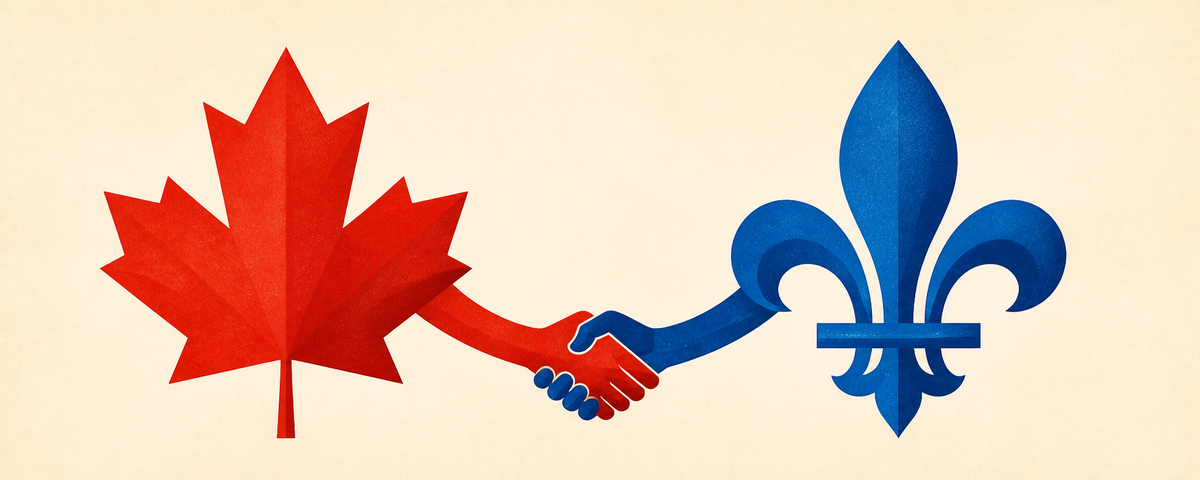
The relationship between Canada and the United States has deteriorated at an alarming rate. We have gone from being the world's closest trading partners to two countries yelling across the border while Donald Trump searches the couch cushions for something else to tariff.
Canada has now walked away from negotiations. Prime Minister Mark Carney recalled our negotiators after the United States introduced last-minute demands he described as unfair and uneconomic, saying they called into question whether Washington could be trusted to honour any agreement it signed. The United States responded by imposing 50 per cent tariffs on roughly $28 billion in Canadian exports, and Canada has promised to answer dollar for dollar beginning September 8. That is no longer an ordinary disagreement over trade policy. It is an economic war.
The American tariff lists include milk, cream, clothing, cement, smartphones, motorcycles, hockey equipment, fishing rods, Christmas decorations, dog leashes, saddles, chandeliers, floating docks, wading pools, synthetic eyebrows and false beards.
Yes, false beards.
Somewhere in the White House, Stephen Miller is resting contentedly in his coffin, delighted that the administration has finally discovered Canada's Achilles' heel. Forget automobiles, steel, aluminum, lumber, oil, electricity and critical minerals. Those were merely distractions. The artificial-beard industry is clearly a far larger pillar of the Canadian economy than anyone ever estimated, and Miller is convinced that pricing Canadian beards out of the American market will finally bring Canada to its knees.
Of course, that is not how tariffs work.
The tariff is a tax paid by the American company importing the Canadian beard. That cost will then be passed on to the American consumer attempting to disguise himself, play Tevye in community theatre or convince children at a shopping mall that he recently arrived from the North Pole.
The immediate crisis will not be in Canada. It will be in the United States.
American disguise shops will raise their prices. Community theatres will slash their facial-hair budgets. Thousands of American mall Santas will be forced to choose between absorbing the tariff themselves or passing it along through sharply higher lap-sitting fees. Halloween shoppers will face the terrible prospect of paying 50 per cent more to look like Abraham Lincoln, a lumberjack or a member of ZZ Top.
Canadian fake-beard manufacturers may eventually lose business if American consumers stop buying, but the first person wounded by this tariff will be some poor bastard in Buffalo staring at a $39.99 synthetic goatee that cost $24.99 the week before.
This is the recurring miracle of Trump's tariff policy. He taxes American importers, the importers charge American customers more, and then Trump announces that a foreign country has paid him tribute. It is rather like punching yourself in the face and declaring victory because your neighbour's hand now hurts from applauding.
Somewhere in Ottawa, meanwhile, a civil servant has been forced to calculate the strategic importance of Canada's fake-beard exports because the president of the United States has apparently identified theatrical facial hair as a threat to American national security.
The tariffs also cover antiques between 100 and 250 years old, meaning Trump has managed to tax objects manufactured before either country had modern tariff legislation. Nothing says "America First" quite like protecting American workers from a Canadian chair built during the administration of James Buchanan.
The absurdity of the list should not distract from its seriousness. These tariffs apply even to goods that comply with the Canada–United States–Mexico Agreement, the trade agreement Trump himself signed during his first presidency. They have no stated expiry date, and they hit industries employing real people who cannot pay their mortgages with the comforting knowledge that Washington's trade policy is merely fucking ridiculous. Only about five per cent of Canadian exports are covered by this round, but the products and communities being struck are anything but theoretical.
Then came what may be the ultimate expression of American ignorance about Canada: the attempt to drag French-language protections into the negotiations.
American objections reportedly extended to Quebec's language and cultural rules, including requirements concerning French descriptions on products and the promotion of French-language content. Carney said plainly that Canada would not compromise on the protection of French or Canadian culture. The American trade representative later tried to dismiss the controversy as a "funny fake story," apparently believing that denying a demand after negotiations collapse makes everyone forget it was raised. Carney responded that it was not funny and that the two sides had an "enormous spread" in their understanding of the issue. In Quebec, French-language protections are not an irritating regulation. They are rights.
Seriously. Trump is prepared to intensify a trade war because there is French on the cereal boxes.
What kind of narcissistic asshole looks at more than a century and a half of Canadian history and concludes that the secret to cracking the country is bilingual packaging?
Canada has been wrestling with the relationship between English and French since Confederation. The Constitution Act of 1867 protected the use of both languages in Parliament, federal laws and Quebec's legislature and courts. The federal Official Languages Act followed in 1969. We have endured decades of constitutional arguments, cultural disputes and two Quebec referendums. We have fought, compromised, complained and gradually assembled a balance that remains imperfect but belongs to us.
Apparently, someone in Washington thought French could be used as a wedge between English- and French-speaking Canadians.
Tabarnak de câlice, did they ever misread that one.
Ben voyons donc, tabarnak. Vous pensez vraiment que vous allez débarquer icitte avec vos osties de tarifs pis nous dire quelle langue mettre sur nos boîtes de céréales? Allez donc manger un char de marde. Le français, c'est pas une câlice de barrière commerciale. C'est chez nous. C'est notre histoire, notre culture, nos familles, pis notre droit de vivre en français sans demander la permission à un ostie de milliardaire orange à Washington.
Gardez votre deal de marde, pliez-le en quatre, pis crissez-vous-le dans le cul. On n'est pas votre colonie. On n'est pas votre cinquante-et-unième État. Pis on n'est certainement pas votre ostie de dépanneur de pétrole, d'électricité, de potasse pis de minéraux critiques. Touchez pas à notre langue. Touchez pas à notre culture. Touchez pas à notre pays. Pis si ça fait pas votre affaire, décâlissez.
There. No diplomatic translation required.
You do not need to speak fluent French to understand décâlissez. It means that the negotiations are over and you should begin moving rapidly in the general direction of somewhere the fuck else.
I am an English-speaking Canadian, but I will drop the gloves to defend the rights of my francophone compatriots. So will millions of others who may not speak more French than bonjour, merci, poutine and whatever they can remember from the back of a cereal box. We do not have to agree with every Quebec language law to understand that the linguistic and cultural character of Canada is not Washington's to negotiate away.
The Trump administration seemed to think English-speaking Canadians would hear that the Americans wanted to weaken French protections and respond, "Well, finally, someone is dealing with all those inconvenient accents."
Instead, the response was closer to, "Who the fuck asked you?"
That is the extraordinary miscalculation. Canadians can argue about bilingualism amongst ourselves until the sun burns out. Quebec can accuse Ottawa of suffocating its culture. Alberta can accuse Quebec of running the country. Ontario can forget that anything exists beyond Ontario. The rest of us can roll our eyes, reopen the Constitution and begin another forty-year argument over what precisely everyone agreed to in 1867.
That is normal Canadian family dysfunction.
But the moment a foreign government announces that French is a trade irritant and suggests that our linguistic arrangements should be altered for the convenience of American corporations, the argument changes. Suddenly it is no longer English Canada against French Canada. It is Canada against some loud asshole from Florida trying to tell us what language belongs on a box of Corn Flakes in Trois-Rivières.
Trump's people apparently believed they had found a crack in Canada. Instead, they poured concrete into it.
French was only one part of a proposed arrangement whose cumulative demands, according to Carney, would have compromised Canada's independence, damaged strategic industries and restricted our freedom to build trading relationships elsewhere. The complete proposed agreement has not been released, so claims about specific American rights over Canadian resources should still be treated as reports rather than settled fact. What is established is bad enough: Washington sought concessions affecting Canadian culture, trade sovereignty and industrial policy while offering tariff relief too limited and unreliable to justify them.
The United States also wanted Canada to relax measures involving dairy, American alcohol and automobiles while preserving much of its own tariff structure. The deal reportedly would have reduced American tariffs on Canadian cars and light trucks from 25 to 15 per cent and those on steel and aluminum from 50 to 25 per cent. That is not free trade. It is a protection racket offering to break one of your legs instead of both.
In other words, this was not a trade agreement between equals. It was a request for Canada to accept economic supervision from an American administration whose signature, as Carney put it, is written in pencil.
The response across Canada has been unusually united. Ontario Premier Doug Ford supported Carney's decision and called for retaliation "tariff to tariff, dollar to dollar." He said the proposed agreement was bad for Ontario's auto, steel and manufacturing sectors. After Trump threatened another round of 50 per cent tariffs on Canadian vehicles, parts and steel beginning January 1, Ford became even less diplomatic and said Trump could "kiss my ass."
That is Ontario diplomacy. It lacks Quebec's magnificent ecclesiastical vocabulary, but the message survives translation.
Manitoba Premier Wab Kinew was equally clear.
CNN, apparently concerned that its viewers might mistake Manitoba for a household appliance, identified him as "Wab Kinew — an Indigenous premier."
That is fucking bullshit.
He is Wab Kinew, the Premier of Manitoba. His First Nations identity is historically important. He was the first First Nations person elected to lead a Canadian province, and that matters enormously when the subject is representation, reconciliation or his own political history. It was not what made his comments about tariffs newsworthy.
Imagine Canadian television covering an international dispute and identifying Barack Obama as "Obama — the Black guy." Americans would rightly ask what the fuck was wrong with us. Even "Barack Obama, a Black president" would be absurd if his race had nothing to do with the story being discussed. He was the President of the United States. That was the relevant credential.
Kinew is not some colourful Indigenous commentator CNN discovered near a ceremonial drum and invited to provide a regional opinion. He is the elected head of Manitoba's government. He represents more than a million people, runs a provincial administration and sits at the table with the Prime Minister and the other premiers when Canada determines its response to the United States.
Identifying him primarily through his ethnicity reduces a head of government to an American network's idea of an interesting demographic. It manages to sound progressive while doing something deeply patronizing. Canada is not an exotic collection of lumberjacks, Mounties, French people and Indigenous premiers assembled to provide background colour for American television.
Kinew is the Premier of Manitoba. Start there.
He said, "History will not be kind to Donald Trump, so we should never appease him." His conclusion was that Canada should fight back and be prepared to "duke it out" with the United States for as long as Trump remains in power. Ford and Kinew come from different political traditions, but neither appears interested in signing Canada up as a wholly owned subsidiary of Mar-a-Lago.
Nor are Canadians treating this as ordinary partisan theatre. An Angus Reid Institute poll found that 76 per cent believed Canada was right to walk away rather than accept a bad agreement. Even 53 per cent of people who voted Conservative in the last federal election supported the decision, while 62 per cent said the proposed dollar-for-dollar retaliation was appropriate. Canadians are worried about their jobs and the economic damage, but they have apparently concluded that national sovereignty remains more important than obtaining a slightly cheaper toaster from Ohio. That is about as close to a national consensus as Canada ever gets without someone scoring an overtime goal.
We should also remember that Trump is not America. A March survey found that 51 per cent of Americans wanted no tariffs on Canadian goods at all, 73 per cent viewed Canada favourably and nearly two-thirds understood that tariffs are primarily paid by American consumers and businesses. Most Americans have no interest in paying more for cars, houses, food or synthetic eyebrows because their president is angry at Quebec.
The people on both sides of the border are going to suffer for this. Canadian businesses will lose customers as their goods become more expensive in the United States. American manufacturers will pay more for Canadian materials and components, then pass much of that cost to their customers. Families will pay higher prices. Workers who had no part in these negotiations will lose hours, jobs and sleep.
That is what makes Trump's performance so grotesque. The drama is his, but the consequences belong to everyone else.
There remains the possibility that Trump will TACO: "Trump Always Chickens Out." Auto executives have already expressed doubts about whether the latest threats will ever take effect, because Trump has repeatedly announced tariffs that were later delayed, reduced or forgotten. January 1 comes after the American midterm elections, which makes the deadline look suspiciously like a theatrical threat intended to restart negotiations without requiring Trump to admit that his first theatrical threat failed. The proposed tariffs would also batter the deeply integrated American auto industry, which depends heavily on Canadian parts.
Trump has the attention span of a goldfish trapped in a mirrored bowl. He may become distracted by Greenland, the Federal Reserve, windmills, a celebrity who criticized him or a new theory about why his golf scores are classified information.
The danger is that businesses and workers cannot plan their lives around the likelihood that the president will eventually lose interest.
It is also difficult not to notice that this latest eruption arrives while questions about the Epstein files remain unresolved. It would be irresponsible to declare the trade war a deliberate distraction without evidence, but it would be equally foolish to pretend the administration has been transparent. The Justice Department has faced criticism over extensive redactions and missing material, including FBI interviews concerning an unverified accusation against Trump. The department said it was reviewing whether documents had been improperly withheld.
Trump has not been charged with any crime connected to Epstein and denies knowledge of his activities, but that does not eliminate the public's legitimate demand for complete disclosure. Transparency does not mean releasing millions of pages and somehow misplacing the particularly inconvenient ones.
Canada is now on an economic war footing, reluctantly but unmistakably. This will cost us. Jobs will be threatened, businesses will suffer and Canadians will pay more for some goods once our own retaliatory tariffs take effect. Because our economy depends more heavily on the American market than theirs depends on ours, we may absorb the greater immediate damage.
That does not mean surrender would be cheaper.
Once another government is allowed to dictate our language policy, restrict our trading relationships, hollow out our industries or claim privileged access to our resources, the price is no longer measured only in dollars. We would be paying with the right to govern ourselves.
We do not hate Americans. Most Americans do not support this madness, and many of them will be hurt alongside us. We did not start the fight, and we gain nothing from pretending it will be painless.
But we are Canada.
We have no desire to become Americans, an American state, an American subsidiary, a northern colony or a compliant resource warehouse attached to the upper edge of an increasingly imperial republic.
Our languages are not trade irritants. Our culture is not a bargaining chip. Our industries are not prizes to be won through economic intimidation. Our resources are not the contents of Donald Trump's personal pantry.
If defending that means tightening our belts, buying Canadian, finding new markets and yelling insults across the border until Trump forgets why he was angry, then so be it.
Tabarnak de câlice, mêlez-vous donc de vos osties d'affaires.
And leave our cereal boxes and fake beards the fuck alone.